최고 정치인 실세(實勢)를 언급할 때 ‘인방(人房)’이란 한자 말이 동원된다. 한자의 ‘사람 인(人)’과 ‘방 방(房)’ 자를 쓴다. 특별한 목적이나 긴밀한 관계를 가지고 뭉친 ‘사람들의 무리나 집단’을 뜻한다. 여기에서 방(房)은 "특정한 일을 하기 위해 모인 방(사무실/부서/파벌)"이라는 상징적인 의미를 담고 있다. 유명했던 어원은 중국 문화혁명 시기에 권력을 휘둘렀던 마오쩌둥의 부인 장칭을 비롯한 4명의 절대 실세를 뜻하는 '4인방(Gang of Four)'이었다. 비밀(祕密) 결사체決死體)의 의미이다. 이것이 한국으로 넘어오면서 특정 권력 그룹이나 핵심 세력을 부르는 말로 굳어졌다. 주로, 언론에서 "어떤 분야나 사건에서 가장 핵심적인 역할을 하는 소수의 인물들"을 묶어 부를 때 숫자를 붙여 표현했다. 청와대 3인방, 경제계 4인방, 문고리 3인방,.이재명 3인방 등등이다.
|
▲ 김용범 청와대 대통령비서실 전 정책실장. 올 국감 증인 채택이 불발됐다. ©뉴시스
|
10월29일 진행된 국회 국정감사 가운데 청와대 국정감사 중 국민의힘이 요청한 3인 실세의 증인으로 지목된 김현지, 김용범, 정진상이 어떤 인물인가? 이 날, 국회 운영위원회의 청와대(대통령비서실 등) 국정감사에서 국민의힘이 출석을 요구했으나 더불어민주당의 반대로 채택이 불발된 핵심 인물들이다. 이들 3인은 이재명 정부 청와대 및 여권의 핵심 실세이자 이른바 '성남·경기 라인'의 중심 인물들이었다. 국민의힘은 이들을 상대로 공공기관 인사 개입 의혹 및 주요 정책 결정 과정을 추궁하려 했다.
증인으로 지목된 김현지 청와대 제1부속실장은 이재명 대통령을 성남시장 및 경기도지사 시절부터 가장 가까이서 보좌해 온 최측근 중 한 명이다. 현재 청와대에서 대통령을 지근거리에서 수행하는 제1부속실장을 맡고 있다. 국민의힘은 김현지 실장을 '정권 최대의 실세'로 지목했다. 공공기관 요직에 성남·경기 라인 인물들을 투입한 '인사 농단 및 개입 의혹'의 몸통으로 보고 출석을 요구했다. 한찬식 민정수석 등 고위직 인사 면접에 직접 관여했는지 여부 등을 따져 물으려 했다.
정진상 전 더불어민주당 대표실 정무조정실장도 증인 물망에 올랐다. 그는 이재명 대통령이 성남시장 시절 때부터 정책비서관, 경기도 정책실장 등을 지냈다. 이 대통령과 오랜 정치적 동지이자 핵심 측근. 이 대통령이 민주당 대표를 지낼 당시 대표실 정무조정실장을 역임했다. 그는 김현지 실장과 마찬가지로 정부의 보이지 않는 실세로서 '성남·경기 라인 인사 전횡 의혹'의 전모를 밝히기 위해 소환 대상에 올랐다. 야당은 그가 청와대 공식 직책이 없음에도 국정에 영향력을 행사하고 있는지 등을 검증하려 했다.
김용범 전 청와대 정책실장은 이재명 정부 출범 이후 청와대에서 경제 정책을 총괄했던 전 정책실장이었다. 국민의힘은 올해 초 김용범 당시 전 청와대 정책실장이 주재한 회의에서 도입이 결정된 '단일 종목 레버리지 ETF' 관련 정책 실패를 규명하고자 했다. 야당은 이 정책 도입 과정에 대한 녹취록 재생과 함께 김 전 실장의 출석을 요구하며 국민 재산 손실에 대한 책임을 묻고자 했다.
이재명 청와대, ‘권력자 3인방’이란 신조어 생겨
국민의힘은 위에서 거명된 3인 핵심 증인을 불러 심문하려 하려 했다. 그런데 그 길이 막혔다. 증인심문에 실패했다. 이에 따라 ‘줄줄이 막아놓은 방탄 국감"이라며 거세게 반발했다. 더불어민주당은 구체적인 근거가 없는 정치 공세이며, 김현지 부속실장의 경우 부속실장이 국감에 출석했던 전례가 없었다는 이유로 맞서, 결국 이들의 증인 채택은 표결 끝에 최종적으로 무산됐다.
지난 10월29일 국회 국감에 불참한 청와대 관련 주요인사 3인으로 인해, 이재명 권부도 ‘권력자 3인방’이란 신조어가 생겨났다. ‘개방조직을 총칭하는 칭호(稱號)’가 아닌, 폐쇄조직을 상징하는 칭호가 됐다. '3인방'은 단순히 3명의 사람이 있다는 뜻을 넘어, "특정 목적이나 성격으로 똘똘 뭉친 핵심 3인조"라는 뜻으로 이해되기 시작했다. 이재명 정권은 '권력자 3인방'이란 말의 확산을 무서워하고 조심해야만 한다. 최근, 이재명 정부의 '권력자 3인방’이란 말이, 2026년 정기 국감장에서 나왔다. 증인채택이 무산되면서 ‘방탄국감’이란 말이 등장 했다. 어떤 모임이든지, 비밀결사라면 썩는다. ‘3인방’은 폐쇄칭호라는 점에서 ‘만악(萬惡)의 총칭’일 수 있다.
|
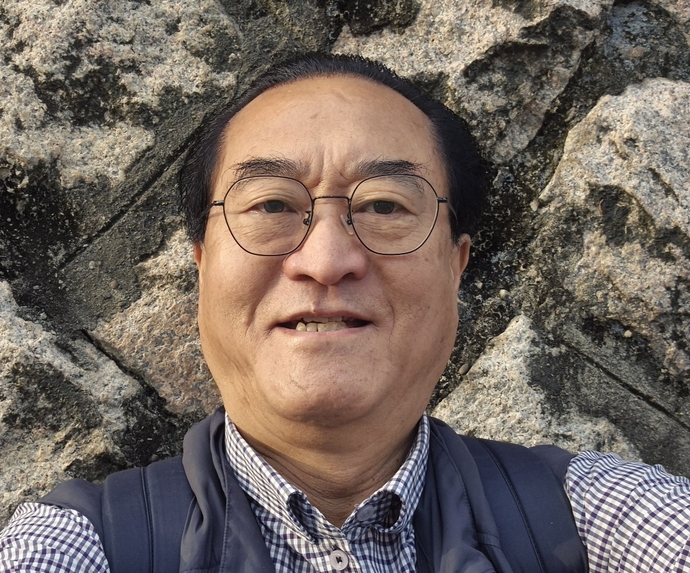
▲ 필자/문일석. 시인. 신문사(본지) 발행인. AI협업-칼럼니스트(본 칼럼 가운데 일부는 생성형 AI 제미나이(Gemini)와의 대화를 바탕으로 재구성된 내용이 담겨있음을 밝힌다.). '비록 중앙정보부(전3권)'의 저자. ©브레이크뉴스
|
박근혜 정권은 임기 중간에 탄핵됐다. 박근혜 정부 시절, '문고리 3인방'으로 불리었던 인물은 박근혜 전 대통령을 1998년 정치 입문 시절부터 청와대까지 가장 가까이서 보좌했던 최측근 비서관 3인(안봉근, 이재만, 정호성)을 지칭했다. ‘문고리 3인방’이란 말이 회자 되면서 박근혜 정권 권부의 힘이 슬슬 빠지기 시작, 권력의 말로(末路)가 엿보이기 시작했었다.
제발, 이 스토리가 이재명 정권에는 적용되지 않기를 바란다. moonilsuk@naver.com
*필자/문일석. 시인. 신문사(본지) 발행인. AI협업-칼럼니스트(본 칼럼 가운데 일부는 생성형 AI 제미나이(Gemini)와의 대화를 바탕으로 재구성된 내용이 담겨있음을 밝힌다.). '비록 중앙정보부(전3권)'의 저자.
*아래는 위 기사를 '구글 번역'으로 번역한 영문 기사의 [전문]입니다. '구글번역'은 이해도 높이기를 위해 노력하고 있습니다. 영문 번역에 오류가 있을 수 있음을 전제로 합니다.<*The following is [the full text] of the English article translated by 'Google Translate'. 'Google Translate' is working hard to improve understanding. It is assumed that there may be errors in the English translation.>
Are Kim Hyun-ji, Kim Yong-beom, and Jeong Jin-sang a "trio of presidential power brokers"? — "Trio" implies an exclusive, closed-off circle.
- Moon Il-suk, Publisher
When referring to the most influential political figures, the term "in-bang" (人房)—composed of the Chinese characters for "person" (人) and "room/chamber" (房)—is often used. It denotes a group or collective of individuals bound together for a specific purpose or by a close, exclusive relationship. Here, "room" (房) carries a symbolic meaning: a space—such as an office, department, or faction—where people gather to carry out specific tasks. Its most famous etymological origin is the "Gang of Four"—a group of four absolute power brokers, including Mao Zedong’s wife, Jiang Qing, who wielded immense influence during China’s Cultural Revolution. The term implies a secretive, tightly-knit group. As it entered the Korean lexicon, it became a standard way to refer to specific power groups or core factions. In the media, it is frequently used by attaching a number to the term to describe a small group of individuals playing the most pivotal roles in a particular field or event—examples include the "Blue House trio," the "economic sector quartet," the "inner-circle trio" (referring to close aides with direct access to the president), and the "Lee Jae-myung trio."
Who are Kim Hyun-ji, Kim Yong-beom, and Jeong Jin-sang—the three influential figures requested as witnesses by the People Power Party during the National Assembly’s audit of the Blue House on October 29? These are key individuals whose attendance was demanded by the People Power Party during the National Assembly Steering Committee’s audit of the Blue House (including the Office of the President), though the motion to summon them was ultimately blocked by the opposition Democratic Party of Korea. These three individuals were key power brokers within the administration and the ruling party—central figures in what is known as the "Seongnam-Gyeonggi line." The People Power Party (PPP) sought to question them regarding allegations of interference in public-sector appointments and their involvement in major policy-making processes.
Kim Hyun-ji, the Director of the First Presidential Office—who was named as a witness—has been one of Lee Jae-myung’s closest aides, serving him since his time as Mayor of Seongnam and Governor of Gyeonggi Province. In her current role, she works in close proximity to the President. The PPP has labeled her the "most powerful figure" in the administration, identifying her as the central architect behind the alleged manipulation of and interference in appointments to key positions in public institutions—specifically by installing individuals from the "Seongnam-Gyeonggi line." The party intended to question her on matters such as whether she was directly involved in the interview process for high-ranking officials, including the Senior Secretary for Civil Affairs.
Jeong Jin-sang, former Chief of Political Coordination for the Democratic Party leader’s office, was also considered as a witness. A long-time political ally and core confidant of Lee Jae-myung, he served as a policy secretary during Lee’s tenure as Mayor of Seongnam and as Policy Chief during his time as Governor of Gyeonggi Province. He also served as the Chief of Political Coordination in the office of the Democratic Party leader. Like Kim Hyun-ji, he was targeted for summons as an "invisible" power broker, with the opposition party seeking to uncover the full extent of the alleged cronyism—the "Seongnam-Gyeonggi line" appointments. The opposition aimed to verify whether he exerted influence over state affairs despite holding no official position within the administration. Kim Yong-beom, a former presidential policy chief, served as the official overseeing economic policy at the Blue House during the Lee Jae-myung administration. Earlier this year, the People Power Party (PPP) sought to investigate a policy failure concerning the introduction of "single-stock leveraged ETFs"—a move decided during a meeting presided over by Kim. The opposition party demanded that Kim appear for questioning and played transcripts from the policy-making process, aiming to hold him accountable for the financial losses suffered by the public.
During the Lee Jae-myung administration, the term "Blue House Trio" (or "the three key figures of the Blue House") emerged.
The People Power Party attempted to summon and question these three core figures, but they were blocked. Their effort to conduct the witness examinations ultimately failed. In response, there was fierce backlash, with critics labeling it a "shielding parliamentary audit"—a process systematically blocked at every turn. The Democratic Party of Korea countered by arguing that the demand lacked concrete justification and that there was no precedent for a chief of an auxiliary office (such as the office supporting the First Lady) to appear at a parliamentary audit. Ultimately, the motion to summon these individuals as witnesses was defeated following a vote.
Following the absence of three key figures associated with the Blue House from a parliamentary audit on October 29, the term "Blue House Trio" (or "three-person inner circle") emerged. Rather than denoting an open or accessible group, the term became a symbol of insularity and closure. It came to be understood not merely as a collection of three people, but as a "tight-knit core trio bound together for a specific purpose or agenda." The administration should be wary of the spread of such a label. Recently, the phrase "Lee Jae-myung’s trio" was mentioned during the 2026 regular parliamentary audit. As the attempt to summon these individuals as witnesses failed, the term "shielding parliamentary audit" was coined. Any group that functions like a secret society is bound to become corrupt. In its implication of exclusivity, the term "trio" can effectively serve as a catch-all for "the root of all evil."
The Park Geun-hye administration faced impeachment midway through its term. During that era, the term "doorknob trio" (or "gatekeeper trio") referred to three close aides—An Bong-geun, Lee Jae-man, and Jeong Ho-seong—who had served as the former president’s innermost confidants, supporting her from her entry into politics in 1998 all the way through her time in the Blue House. As the term "doorknob trio" began to circulate, the power held by the core of the Park Geun-hye administration gradually... The decline had begun; the end-stage of power was starting to come into view. I sincerely hope that this narrative does not come to apply to an "Lee Jae-myung administration." moonilsuk@naver.com
*Author: Moon Il-suk. Poet. Publisher of this newspaper. AI-collaborating columnist (please note that portions of this column have been reconstructed based on dialogues with the generative AI, Gemini). Author of "Although It Was the KCIA" (a three-volume work).
원본 기사 보기:
브레이크뉴스